Shockwave Therapy for Tendon Pain: A Non-Surgical Option
Shockwave therapy uses acoustic pressure waves to target persistent tendon and soft-tissue pain. Learn how it works, what conditions it may help, and what to expect.
By Integrative Pain Institute
Introduction
Tendon pain can be stubborn. Conditions like plantar fasciitis, Achilles tendinopathy, and tennis elbow often persist for months, and many people seek non-surgical options before considering more invasive procedures.
Shockwave therapy is one such option offered at Integrative Pain Institute in South Miami. This article explains what it is, how it may work, and what to expect during treatment.
What Is Shockwave Therapy?
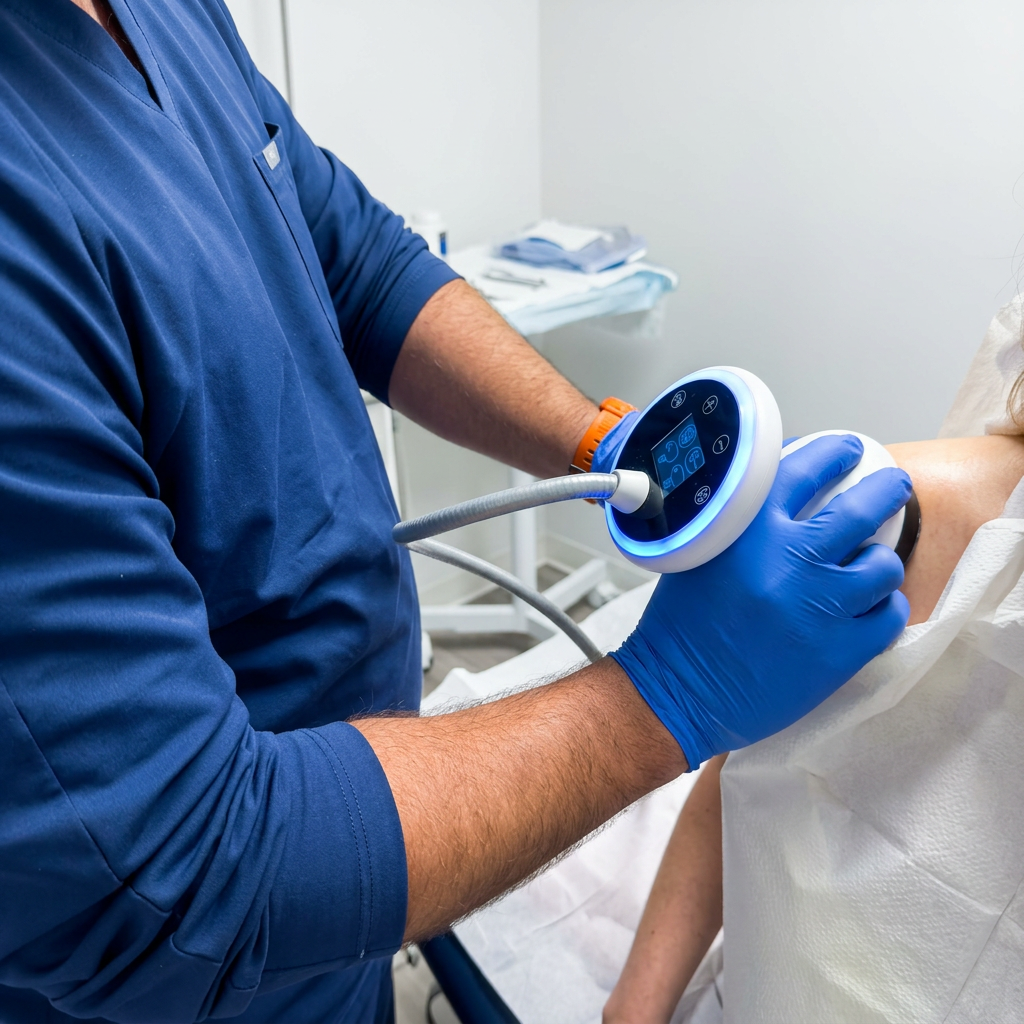
Shockwave therapy delivers focused acoustic pressure waves to a targeted area of the body. The waves are generated by a device and applied through the skin to the painful tissue. There are no incisions and no needles involved.
The therapy is sometimes referred to as extracorporeal shockwave therapy (ESWT).
How It May Work
Research suggests that shockwave therapy may:
- Influence local pain signaling
- Promote a tissue response in the area where tendons attach to bone
- Affect blood flow to the targeted tissue
The exact mechanisms are still being studied, and not every patient responds. Benefits vary by condition and individual.
Conditions It May Help
Shockwave therapy is most commonly considered for:
- Plantar fasciitis (heel pain)
- Achilles tendinopathy
- Tennis elbow (lateral epicondylitis)
- Patellar tendinopathy
- Other persistent tendon or soft-tissue complaints
It is typically considered when more conservative measures, such as rest, activity modification, and stretching, have not provided adequate relief.
What to Expect During Treatment
A typical session lasts 10 to 20 minutes. The provider applies a gel to the skin and moves the shockwave applicator over the painful area. You may feel some discomfort during treatment, but it is usually brief.
Most treatment plans involve several sessions spaced over a number of weeks. Your provider will recommend a schedule based on your condition and response.
Potential Side Effects
Shockwave therapy is generally well tolerated. Common, temporary effects include:
- Mild soreness in the treated area
- Redness or bruising at the application site
- Temporary increase in pain that typically resolves within a day or two
Serious complications are uncommon.
Is Shockwave Therapy Right for You?
Shockwave therapy is not appropriate for everyone. It may not be suitable for people with certain conditions, including some circulatory disorders, during pregnancy, or when taking certain medications. A thorough evaluation is the first step.
If you are dealing with persistent tendon pain and want to learn whether shockwave therapy may fit your situation, schedule a consultation to discuss your options.
Ready to Explore Your Treatment Options?
Schedule an individualized evaluation to discuss which therapies may be appropriate for your condition and goals.